The Legend of Zelda: Why This Series Changed Video Games Forever
Feb 4th '26 6:21am:
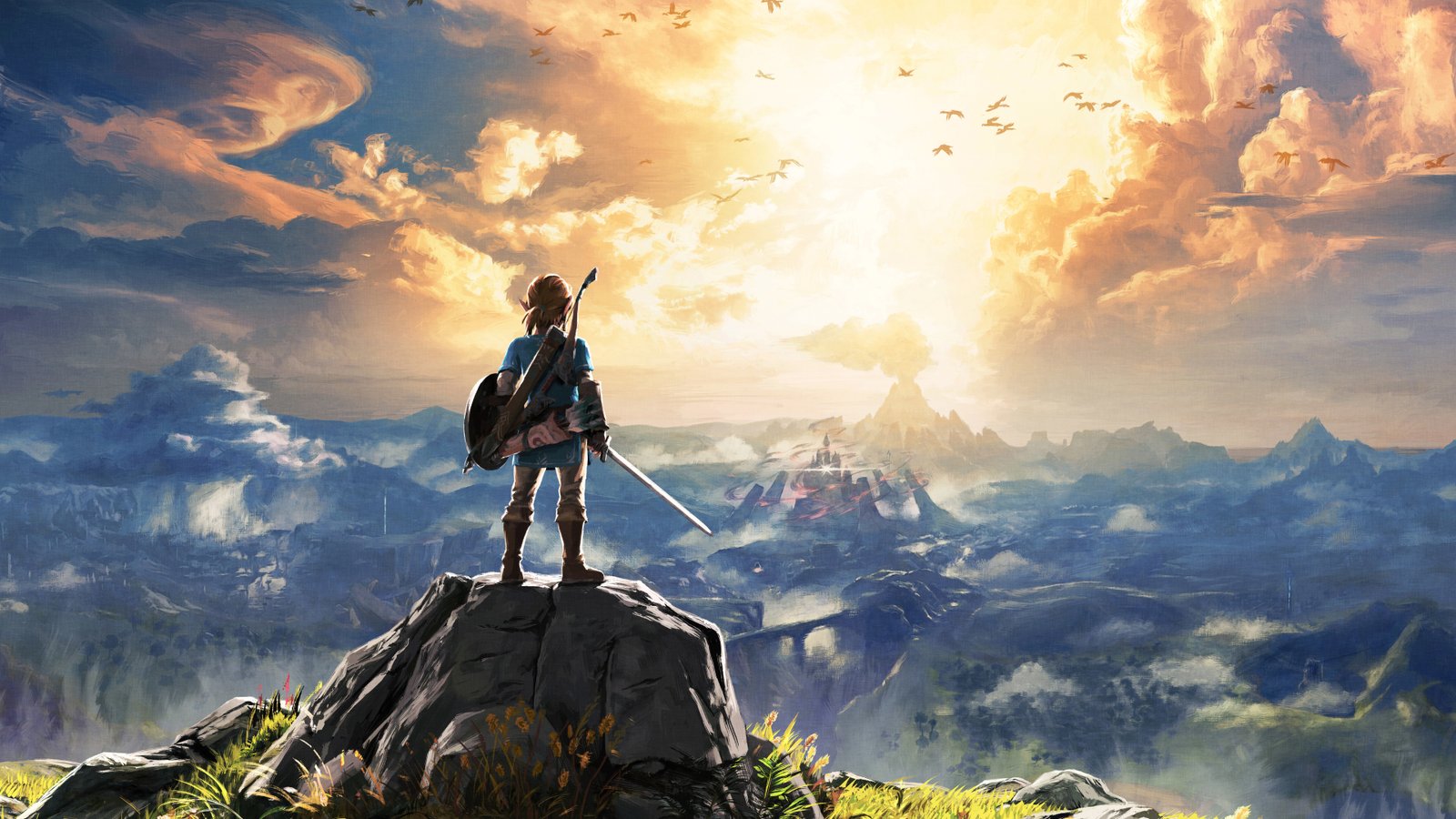
Talking about The Legend of Zelda is talking about something far bigger than a video game. It is one of those works that crosses generations, shapes how games are designed and still manages to feel fresh decades after its first release. Even people who have never held a Nintendo controller probably recognize the name Link, know the main theme melody or have heard about a kingdom called Hyrule constantly in danger.
What makes Zelda special is not just its longevity, but its rare ability to reinvent itself without losing its identity. With every new entry, the series finds a balance between respecting its past and having the courage to change. In this review, we will walk through the history of the franchise, understand its core pillars, analyze its evolution and reflect on why it remains so relevant in an industry that never stops changing.
## The Birth of a Legend
The Legend of Zelda was released in 1986 on the Famicom Disk System in Japan and shortly after on the NES worldwide. Created by Shigeru Miyamoto and Takashi Tezuka, the game was inspired by childhood memories, especially the feeling of exploring forests, caves and paths without knowing exactly what you would find. That sense of free discovery became the heart of the series.
From the very beginning, Zelda stood apart by not treating the player as someone who needed constant guidance. There were no long explanations, flashing arrows or intrusive tutorials. The game trusted the player’s curiosity and rewarded exploration with secrets, items and unforgettable moments.
That philosophy is still alive today, despite all the technological and design changes over the years.
## A Simple Story Filled With Meaning
In most Zelda games, the narrative revolves around three central figures: Link, Zelda and Ganon or Ganondorf. Link is the silent hero, usually an ordinary young person forced to grow quickly. Zelda is the guardian of wisdom, often a princess, but never just a helpless figure. Ganon represents raw power and unchecked ambition.
Zelda’s brilliance lies in using simple archetypes to tell deep stories without relying on long dialogues. The world itself does the talking. Ruins hint at ancient civilizations. Villages show the consequences of spreading evil. Silence often communicates more than words.
Each game retells this legend in a different way. Sometimes darker, sometimes lighter, but always with the feeling that the cycle of courage, wisdom and power is repeating itself somehow.
## Exploration as the Core Pillar
If there is one element that defines Zelda better than any other, it is exploration. Since the first game, the map has never been just a backdrop, but a living puzzle. Walking in the wrong direction might lead to an enemy far too strong or to a valuable secret.
Over time, this idea was refined. In A Link to the Past, the dual world added new layers to map interpretation. In Ocarina of Time, the transition to 3D proved that exploration could remain intuitive even in three dimensions. In Breath of the Wild, freedom reached a new level, allowing players to go almost anywhere from the very start.
The game never asks where you want to go. It simply drops you into the world and trusts curiosity to do the rest.
## Dungeons and the Joy of Problem Solving
Zelda’s dungeons often feel like games within the game. Each one has its own identity, visual theme, enemies and internal logic that must be understood. Completing a dungeon is not just about defeating enemies, but about learning how that space works.
The puzzles are never random. They teach something, introduce a new mechanic or ask the player to creatively use what they already know. The feeling of unlocking a path after carefully observing the environment for several minutes is one of the series’ strongest trademarks.
Even when Breath of the Wild reduced the focus on large traditional dungeons and replaced them with smaller shrines, the essence of smart puzzle design remained intact.
## Technical and Artistic Evolution
Visually, Zelda has never been afraid to change. The leap from pixel art to 3D in Ocarina of Time was revolutionary. Wind Waker divided opinions with its cartoon-like style, yet aged better than many realistic games of its era. Twilight Princess embraced a darker tone, while Skyward Sword leaned into a living painting aesthetic.
Breath of the Wild solidified a visual style that blends simplicity, elegance and personality. It is not realistic, but expressive. Not exaggerated, but memorable.
This artistic freedom allows Zelda to age gracefully. The games are not trapped by short-lived visual trends.
## A Soundtrack That Lives in Memory
Few series have created music as recognizable as Zelda. The main theme, Zelda’s Lullaby, Kakariko Village, the sound of opening a chest. These elements are deeply embedded in gaming culture.
Music has always been used with intention. Often, silence is just as important as melody. Breath of the Wild pushed this idea further, using minimalistic tracks that appear subtly as the player explores.
The soundtrack is not there to demand attention. It exists to enhance the feeling of being in that world.
## Breath of the Wild and the Reinvention of the Series
When Breath of the Wild launched in 2017, it became clear that Nintendo was not interested in making just another Zelda game. The goal was to rethink everything. The game abandoned several long-standing conventions in favor of complete freedom.
Breakable weapons, emergent physics, multiple solutions to the same problem and a fragmented narrative that players piece together over time. All of this made every playthrough feel personal.
More than a commercial success, Breath of the Wild influenced open-world design across the entire industry. Many later games began looking to Zelda for inspiration, something previously more common with Western franchises.
## Tears of the Kingdom and the Refinement of the Idea
Tears of the Kingdom took the foundation of Breath of the Wild and expanded it in unexpected ways. The game did not simply add content, but deepened systems. Creativity became a core mechanic. Building, combining, experimenting and failing became essential parts of the experience.
What stands out most is how the game manages to be complex without becoming confusing. It respects the player’s intelligence and allows everyone to find their own way to play.
## Why Zelda Remains Relevant
The Legend of Zelda remains relevant because it never settles. The series constantly questions its own rules. At the same time, it holds onto clear values. Exploration, curiosity, respect for the player and a sense of discovery.
In an industry increasingly driven by metrics, aggressive monetization and disposable experiences, Zelda chooses the opposite path. Complete games, designed to be explored at the player’s pace.
That creates something rare today. A lasting emotional connection.
## The Legacy of an Eternal Series
Zelda is not just a successful franchise. It is a design language. Many modern games, even outside Nintendo, carry Zelda’s DNA in their world design. The way we think about open worlds, environmental puzzles and silent progression owes a lot to this series.
Each new release is not just a launch, but an event. A dialogue between past and future. Proof that innovation is still possible without losing soul.
## Images That Help Show the Visual Impact
Official image of The Legend of Zelda Breath of the Wild
[https://www.nintendo.com/eu/media/images/10_share_images/games_15/nintendo_switch_4/H2x1_NSwitch_TheLegendOfZeldaBreathOfTheWild.jpg](https://www.nintendo.com/eu/media/images/10_share_images/games_15/nintendo_switch_4/H2x1_NSwitch_TheLegendOfZeldaBreathOfTheWild.jpg)
Promotional image of Ocarina of Time
[https://upload.wikimedia.org/wikipedia/en/5/57/The_Legend_of_Zelda_Ocarina_of_Time.jpg](https://upload.wikimedia.org/wikipedia/en/5/57/The_Legend_of_Zelda_Ocarina_of_Time.jpg)
Wind Waker artwork
[https://upload.wikimedia.org/wikipedia/en/2/2a/The_Legend_of_Zelda_The_Wind_Waker_Game_Cover.jpg](https://upload.wikimedia.org/wikipedia/en/2/2a/The_Legend_of_Zelda_The_Wind_Waker_Game_Cover.jpg)
## Sources and Further Reading
Official history of the series on Nintendo’s website
[https://www.zelda.com/about/](https://www.zelda.com/about/)
Interview with Shigeru Miyamoto about the creation of Zelda
[https://www.nintendo.co.jp/nom/0405/1/index.html](https://www.nintendo.co.jp/nom/0405/1/index.html)
Breath of the Wild review by The Guardian
[https://www.theguardian.com/technology/2017/mar/02/the-legend-of-zelda-breath-of-the-wild-review](https://www.theguardian.com/technology/2017/mar/02/the-legend-of-zelda-breath-of-the-wild-review)
Official Zelda timeline
[https://zelda.fandom.com/wiki/Zelda_Timeline](https://zelda.fandom.com/wiki/Zelda_Timeline)